VPN Business FAQ
Straight answers to the questions people ask before starting a VPN business — including the ones where the answer is “that depends” or “nobody can promise that”.
Getting started
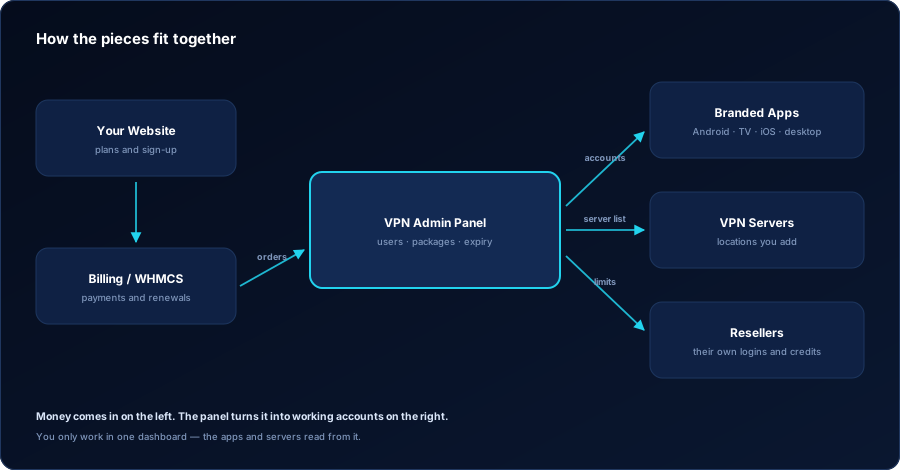
Five things: a brand, an admin panel, at least one branded app, VPN servers, and a way to take payment. This site covers the middle three; the brand and the payment provider are yours. Everything else — resellers, extra platforms, billing automation — is growth, not launch.
To run it day to day, no. Creating customers, renewing accounts, adding a server and topping up a reseller are all forms in a dashboard. The technical work happens during setup, and you get documentation and a walkthrough at handover.
It depends on how many platforms you launch with and how ready your brand assets and servers are. A single-platform launch is a much shorter project than five platforms with billing automation. You get a realistic timeline in writing with your quote.
Yes, and most businesses should. A common path is the panel plus an Android app, then TV, then desktop and billing automation once revenue justifies them. Everything shares the same panel, so adding a piece does not disturb what already runs.
The admin panel
The private dashboard behind your service. You use it to create and renew accounts, add servers, define packages, manage resellers and see what is expiring. Your customers never see it.
Yes. Staff logins and reseller logins are separate, and each type sees only what it should. A support user does not need the permissions you keep for yourself.
On hosting you control, under your own domain. The customer data and the accounts belong to you.
Applications
Yes. The app name, icon, colours, wording and store listing are yours. Nothing in the customer-facing product points back to us.
Android, Android TV and Firestick, iOS, Windows and macOS. Most businesses start with Android because it reaches the widest audience and releases fastest.
We prepare submissions to meet the current requirements each store applies to VPN applications. The stores decide what they publish and can change their rules, so no honest supplier can guarantee approval.
Yes. One username works on phone, TV and desktop, and the device limit is counted across all of them together by your panel.
Servers
The panel manages servers rather than replacing them. Most clients rent their own servers so the hosting accounts stay in their company name. We help you plan how many you need and where, and configure them for the platform.
Fewer than most people expect. A short list of consistently fast locations produces fewer complaints than a long list where half are congested. Add locations as customers ask for them.
Yes. Servers are put into groups and packages point at groups, so a starter plan and a premium plan can offer genuinely different location lists.
Resellers and billing
A reseller gets their own login and a credit balance you sell them. Creating or renewing a customer spends credit, so you are paid before the account exists. They see only their own customers.
Through your own website and your own payment provider. If you connect a billing system such as WHMCS, a paid order can create the VPN account automatically and a renewal extends the existing one.
Always. Automation handles volume; manual control stays available for trials, corrections, goodwill extensions and customers who paid you another way.
Commercial
Because the honest answer depends on how many platforms you need, what your panel has to do and which integrations are in scope. A published price would either be wrong for you or padded to cover the largest possible project. You get a written quote for what you actually asked for.
The brand, the domain, the hosting accounts, the store listings and the customer data are yours. What you receive in terms of software ownership, licensing and source code is set out in your written scope so there is nothing to interpret later.
Documentation, a walkthrough of the panel and support through the launch period. Any ongoing support or update arrangement is agreed as part of the scope rather than negotiated during an incident.