You top up the balance
When a reseller pays you, you add credits to their account in the panel. That is the moment money changes hands.
Grow through partners instead of growing your support team. Resellers get their own login, their own credit balance and their own customers — while you keep the servers, the platform and the rules.
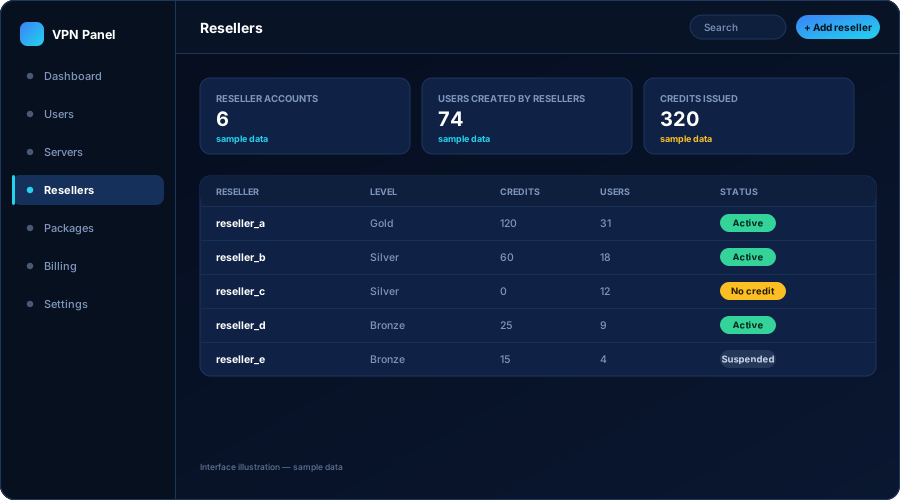
Selling directly to consumers means paying for every customer twice: once in advertising, and again in support. Resellers change that arithmetic. A reseller brings their own audience, handles their own first-line support and pays you up front in credit. Your cost per customer collapses.
In practice, resellers are people who already have an audience that needs a VPN: IPTV sellers, phone shops, small ISPs, community groups, gaming communities and individual sellers on social platforms. They do not want to build a VPN business. They want a product they can sell tomorrow.
What makes this work is separation. If every reseller has to message you to create an account, you have not gained leverage — you have added a middleman to your own support queue. A proper reseller system removes you from the loop entirely.
A reseller account is a separate login into the same platform, restricted to what that partner is allowed to do. When they log in they see their own customers, their own credit balance and the packages you have made available to them.
This separation is what makes it safe to hand out logins to people you have never met in person.
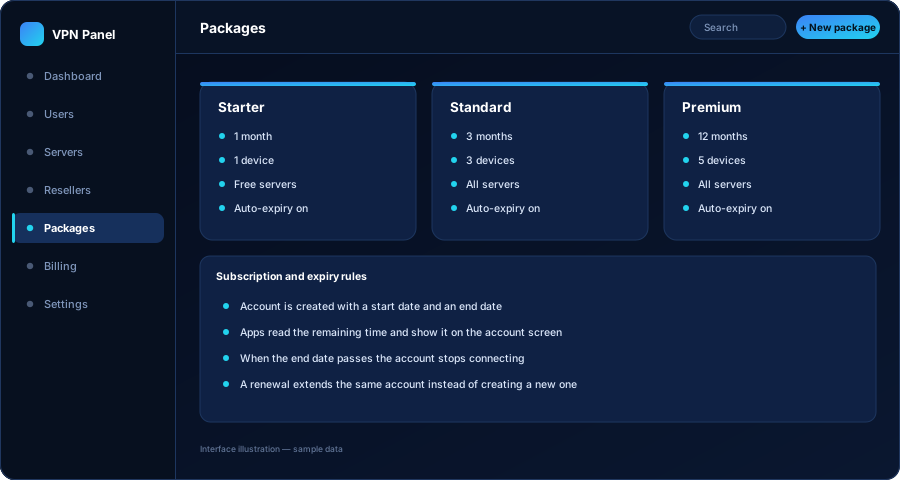
Credit is the mechanism that makes reselling low-risk. It replaces invoicing, chasing and trust with a balance that either has enough in it or does not.
When a reseller pays you, you add credits to their account in the panel. That is the moment money changes hands.
Each package costs a set number of credits. Creating a customer or renewing one deducts that amount automatically.
A reseller with no credit cannot create or renew anything. Existing customers keep working until their own end dates.
| Package | Duration | Credit cost | Typical use |
|---|---|---|---|
| Starter | 1 month | 1 credit | Trials and price-sensitive customers |
| Standard | 3 months | 3 credits | The volume seller for most resellers |
| Premium | 12 months | 10 credits | Discounted long-term commitments |
Not every reseller should get the same terms. A partner who brings a hundred customers a month is not the same as one testing the water, and your system should reflect that without you managing it by hand.
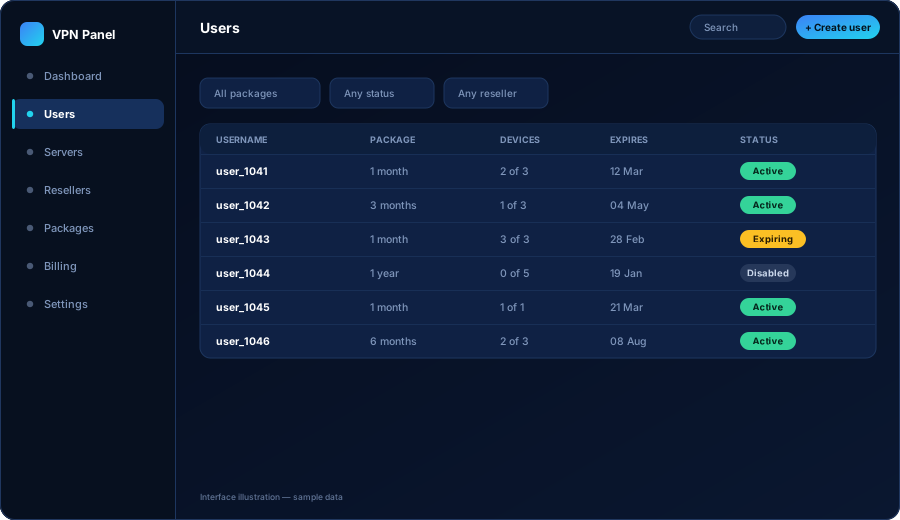
Choose which packages appear in a reseller’s panel. A new partner might only be able to sell monthly plans; a trusted one gets the yearly package at a better credit rate.
Cap how many active accounts a reseller may hold at once. This protects your server capacity and gives you a natural reason to have a commercial conversation when a partner grows.
Because server access is attached to the package, a reseller selling the starter package automatically sells the starter server group. You do not have to police it.
Six steps, none of which involve you.
Once a week, once a month, or whenever their balance runs low. You add the credits in your panel when the payment arrives.
Through whatever channel that reseller already uses — a shop counter, a messaging app, their own website.
They log into their panel, choose a package, and create the account. Credit is deducted at that moment.
The reseller gives their customer the username and password and points them at your branded app.
The app checks the account against your panel and shows the servers that package is allowed to use.
When the account nears its end date, the reseller renews it from their panel and spends credit again.
It is a restricted version of your admin panel. A reseller logs in, sees only their own customers, and can create and renew accounts using the credit balance you sold them. They cannot see your other resellers, your pricing to other partners, or your platform settings.
The usual model is credit up front. The reseller buys a balance from you, and creating or renewing an account deducts from it. You are paid before the account exists, which removes the collection problem entirely.
Multi-level reseller structures are possible depending on the panel build you choose. Tell us during scoping whether you want a flat reseller layer or a hierarchy, because it changes how credits and limits are designed.
You control what each reseller pays in credits, which packages they may sell and how many accounts they may hold. You cannot control the retail price they charge their own customers, but you can control their cost and their volume, which is what protects your margin.
The accounts already created continue under your platform — they are your customers on your servers. Suspension stops the reseller from creating or renewing anything new. How you handle their existing base afterwards is a commercial decision, not a technical limit.
Tell us how you want credits, limits and packages to work for your partners, and we will scope a reseller structure that fits how you sell.